
Key Takeaways
- Review pet policies, fees, and size restrictions before move-in day.
- A pre-move visit can help your pet feel calmer on the big day.
- Familiar items like bedding and toys make a new space feel safe.
- Pets support emotional well-being, daily movement, and a sense of purpose.
- Consistent routines and community resources help pet care run smoothly.
- Give yourself and your pet time to settle in together.
Your Pet Can Come with You
Moving into a senior living community is a big step, and the last thing you want is to leave your four-legged companion behind. Whether it’s a sleepy cat who curls up beside you every morning or a dog who greets you at the door every single time, your pet is part of your daily life. The good news is, they can be part of your new chapter too.
With a little preparation and the right information, transitioning your pet to an independent living or assisted living community can go smoothly for both of you. It starts with knowing what to expect and taking a few simple steps before move-in day arrives.
What You Should Know Before You Bring Your Pet
Before anything else, take time to review the pet policy at your senior living community. Policies can vary quite a bit, so it helps to ask about the details early. You’ll want to know which types of pets are welcome, whether there are size or breed restrictions, and if any deposits or monthly fees apply.
Getting this sorted ahead of time saves you from any surprises later. Most communities that welcome pets are happy to walk you through the specifics, so don’t hesitate to reach out and ask. A quick conversation now can set everything up for a smooth arrival.
How to Prepare Your Pet for a New Home
A Visit Before Move-In Day
If it’s possible, bringing your pet for a short visit before the official move-in day can make a real difference. New smells, sounds, and surroundings can feel overwhelming for animals, especially cats and dogs who are sensitive to change. A calm walk-through lets them take it all in at their own pace.
Let your pet sniff around the common areas or outdoor spaces without rushing them. Even 20 or 30 minutes of gentle exploration can help them feel less startled when move-in day comes. You’ll likely feel more at ease too, knowing your pet had a chance to get familiar with the space.
What to Pack for Your Pet
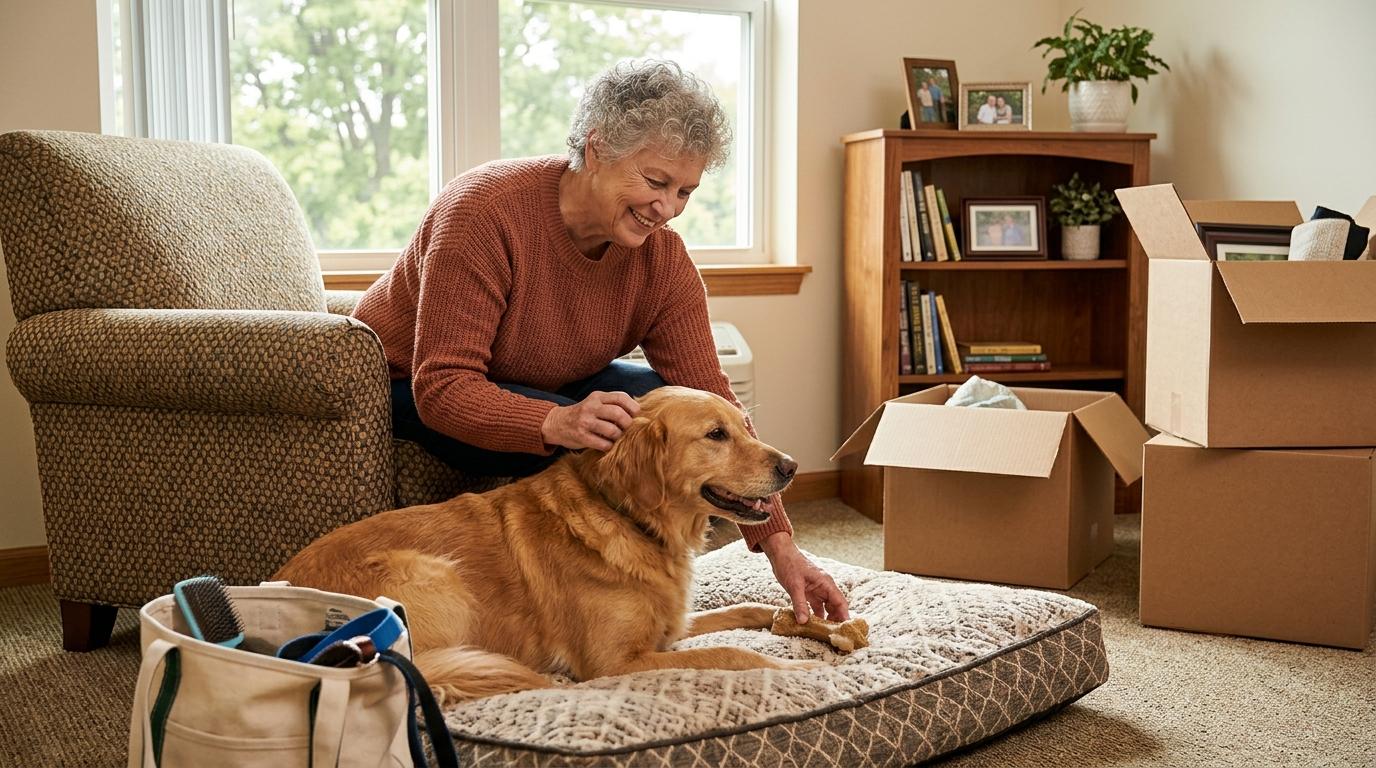
When it comes to your pet’s comfort, familiar items go a long way. Pack their favorite blanket, a well-loved toy, and their regular food bowls. These scents and textures signal safety to your pet, especially in an unfamiliar space.
Try to keep their daily routine as consistent as you can during the first few weeks. Feeding at the same times, going for walks on a similar schedule, and spending quiet time together all help your pet adjust. Routine is reassuring for animals, and honestly, it can be grounding for you too.
How Pets Support Your Well-Being in Senior Living
Pets do more than keep you company. They give your day shape and meaning, which can be especially comforting during a big life transition. Caring for an animal encourages you to get up, get moving, and stay connected to the moment.
Walking a dog gets you outside and often leads to conversations with neighbors. Pet ownership can reduce loneliness and encourage more daily activity in older adults, which makes a real difference in overall well-being. A cat who settles into your lap while you read brings a quiet kind of calm that’s hard to replace. Animal companionship supports a genuine sense of purpose, and that matters deeply in independent living and beyond.
Pets also have a way of drawing people together. Fellow residents who love animals are easy to spot, and your pet can become a natural icebreaker that opens the door to new friendships in your community. The social events and activities available at your community can make that even easier.
Practical Pet Care Tips for Your New Space
Day-to-Day Routines That Work
Setting consistent feeding and walk schedules helps both you and your pet settle into the rhythm of your new home. Check with your community about approved outdoor areas for pets so you know exactly where to go for walks or outdoor time. Having a go-to spot makes the routine feel familiar faster.
When You Need Extra Help with Pet Care
There may be days when pet care feels like more than you can manage alone, and that’s completely okay. Reach out to family members or friends who can step in on harder days. Many communities also have connections to local volunteers or pet care services nearby that can lend a hand.
Asking for help isn’t a sign that something is wrong. It’s just smart planning, and it keeps your pet happy and cared for no matter what the day brings. If you’d like to learn more about the support available, exploring services and programs can give you a clearer picture of what’s on hand.
A Smooth Start for You and Your Pet
Give yourself and your pet room to adjust. The first few weeks in a new place can feel a little uncertain, and that’s normal. Lean on the care team around you when extra support helps, because that’s exactly what they’re there for.
At Eagle Point Senior Living, pets are welcome as part of the family. Your companion brought joy to your life before, and they can keep doing that right here. A beloved pet has a way of turning any new space into home.